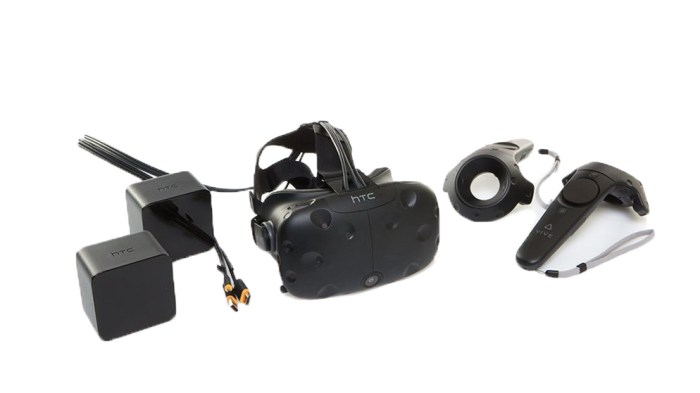
Dive into the world of virtual reality hardware requirements as we uncover the essentials for an immersive VR experience. From GPUs to CPUs, we’ve got you covered!
Whether you’re a VR enthusiast or just getting started, understanding the hardware specs is crucial. Let’s explore what it takes to step into the virtual realm.
Virtual reality hardware requirements
Virtual reality (VR) technology has revolutionized the way we experience digital content by immersing us in a simulated environment. To enjoy this immersive experience, specific hardware components are crucial for a seamless VR setup.
Key Components for VR Setup
- Headset: The VR headset is the primary device that displays the virtual environment to the user.
- Controllers: These handheld devices allow users to interact with the virtual world and manipulate objects.
- GPU: A powerful graphics processing unit (GPU) is essential for rendering high-quality visuals in VR.
- CPU: A fast central processing unit (CPU) is needed to handle the complex calculations required for VR applications.
- RAM: Sufficient random access memory (RAM) ensures smooth performance and multitasking capabilities in VR.
- Storage: Ample storage space is required to store VR games, applications, and media files.
Minimum and Recommended Specifications
- Minimum specifications vary depending on the VR platform, but typically include a mid-range GPU, modern CPU, at least 8GB of RAM, and ample storage space.
- Recommended specifications often include a high-end GPU, powerful CPU, 16GB or more of RAM, and fast SSD storage for optimal performance.
Importance of GPU, CPU, RAM, and Storage
The GPU is responsible for rendering realistic visuals, while the CPU handles computations and AI processes. Sufficient RAM ensures smooth multitasking, and ample storage space prevents lag and enables quick loading times.
Hardware Requirements for Different VR Platforms
| Platform | GPU | CPU | RAM | Storage |
|---|---|---|---|---|
| Oculus Rift | NVIDIA GTX 1060/AMD Radeon RX 480 | Intel i5-4590/AMD Ryzen 5 1500X | 8GB | At least 8GB |
| HTC Vive | NVIDIA GTX 1060/AMD Radeon RX 480 | Intel i5-4590/AMD Ryzen 5 1500X | 8GB | At least 8GB |
| PlayStation VR | None (integrated in PS4) | AMD Jaguar 8-core | 8GB | At least 500GB |
Computer Repair and Consulting
When it comes to computer repair and consulting, it’s crucial to have a good understanding of troubleshooting hardware issues, maintaining computer hardware, and the significance of regular software updates.
Troubleshooting Common Hardware Issues
One of the most common hardware issues in computers is overheating. Ensure proper ventilation and clean out dust regularly to prevent this problem.
Another common issue is a slow system, which can be caused by insufficient RAM or a fragmented hard drive. Upgrade RAM or defragment the hard drive to improve performance.
If your computer is not turning on, check the power source, connections, and battery. Sometimes a simple power cycle can resolve the problem.
Maintaining Computer Hardware for Longevity
- Regularly clean dust from fans and components to prevent overheating.
- Avoid physical damage by handling your computer with care and using protective cases if necessary.
- Keep software updated to ensure compatibility and security.
Importance of Regular Software Updates
Software updates are essential for fixing bugs, improving performance, and enhancing security measures. Neglecting updates can lead to vulnerabilities that may affect hardware functionality.
Role of Consulting Services in Optimizing Computer Hardware Performance
- Consulting services can provide expert advice on upgrading hardware components to meet specific performance requirements.
- They can offer maintenance plans to ensure regular check-ups and preventive measures are in place.
- Consultants can help optimize software configurations for better hardware efficiency.
Data Communication
Data communication is the process of exchanging data between two devices through a transmission medium such as cables, optical fibers, or wireless signals. It plays a crucial role in computer systems by enabling the transfer of information between different components.
Methods of Data Transmission
- In computer networks, data can be transmitted through various methods such as:
- 1. Serial Transmission: Data is sent bit by bit sequentially over a single communication channel.
- 2. Parallel Transmission: Data is sent simultaneously over multiple channels, allowing for faster transfer rates.
- 3. Packet Switching: Data is divided into packets for efficient transmission across a network.
Importance of Data Encryption
- Data encryption is essential for secure communication as it converts plain text into a coded format that can only be deciphered with the correct decryption key.
- Encryption helps protect sensitive information from unauthorized access and ensures data integrity during transmission.
- Popular encryption algorithms include AES (Advanced Encryption Standard) and RSA (Rivest-Shamir-Adleman).
Wired vs. Wireless Data Communication
- Wired technologies, such as Ethernet and Fiber Optics, offer faster data transmission speeds and greater reliability compared to wireless technologies.
- Wireless technologies, like Wi-Fi and Bluetooth, provide more flexibility and mobility but may suffer from interference and signal loss.
- Both wired and wireless communication methods have their own advantages and limitations, making them suitable for different use cases based on requirements.
Computers E-Books
In today’s digital age, e-books have revolutionized the way we read and access information. Let’s explore the evolution of e-books and their impact on the publishing industry.E-books are compatible with a wide range of computer hardware and software, making them accessible to users across different devices. Whether you’re using a laptop, tablet, or e-reader, you can easily download and read e-books on your preferred device.One of the key advantages of e-books over traditional printed books is their convenience and accessibility.
With e-books, you can carry an entire library in your pocket, making it easier to read on the go or switch between multiple books seamlessly. Additionally, e-books often offer features like adjustable font sizes, search functions, and bookmarking, enhancing the reading experience.
Future Trends of E-Books
- Interactive E-books: With advancements in technology, we can expect to see more interactive e-books with multimedia elements like audio, video, and animations integrated into the reading experience.
- Personalized Recommendations: E-book platforms are likely to leverage data analytics and AI to provide personalized book recommendations based on reading preferences and behavior.
- Augmented Reality (AR) Integration: AR technology could enhance e-books by overlaying digital content onto the physical world, creating a more immersive reading experience.
- Subscription Services: The rise of subscription-based e-book services may offer readers unlimited access to a vast library of titles for a monthly fee, changing the way we consume books.
Graphics and Multimedia
Graphics and multimedia play a crucial role in enhancing the visual experience on computers, especially when running graphics-intensive applications and multimedia software. Let’s delve into the hardware requirements and the significance of graphics cards and high-resolution displays in this context.
Graphics Cards and Visual Quality
Graphics cards, also known as GPU (Graphics Processing Unit), are essential components in computers that are responsible for rendering images, videos, and animations. They are designed to handle complex calculations related to graphics processing, freeing up the CPU to focus on other tasks. Graphics cards come with their own dedicated memory, known as VRAM (Video Random Access Memory), which stores textures and other graphical data for faster access.
- Graphics cards significantly impact visual quality and performance in computers by offloading graphics processing tasks from the CPU.
- They are crucial for running graphics-intensive applications such as video editing software, 3D modeling programs, and high-end games.
- Modern graphics cards come with advanced features like ray tracing, which enhances lighting, shadows, and reflections in real-time.
High-Resolution Displays for Gaming and Multimedia Content Creation
High-resolution displays, such as 4K and 8K monitors, are essential for gaming, multimedia content creation, and graphic design work. These displays offer sharper images, more vibrant colors, and increased pixel density, resulting in a more immersive visual experience.
- High-resolution displays are ideal for gaming enthusiasts who want to enjoy games in stunning detail and clarity.
- They are crucial for multimedia content creators who need accurate color reproduction and sharp visuals for editing photos and videos.
- Graphic designers rely on high-resolution displays to work on intricate designs with precision and clarity.
Popular Software for Graphics Design and Multimedia Editing
There are several popular software applications used for graphics design, video editing, and multimedia content creation. These tools offer a wide range of features and functionalities to cater to the diverse needs of professionals and enthusiasts in the graphics and multimedia industry.
- Adobe Creative Cloud: A comprehensive suite of applications including Photoshop, Illustrator, Premiere Pro, and After Effects for graphic design and video editing.
- Autodesk Maya: A powerful 3D modeling and animation software used in film, television, and game development.
- DaVinci Resolve: A professional video editing software with advanced color correction and audio editing capabilities.
Computers Hardware

In a computer system, hardware refers to the physical components that can be seen and touched, such as the monitor, keyboard, mouse, and motherboard. On the other hand, software includes programs and applications that run on the hardware to perform specific tasks.
Types of Computer Hardware
- Input Devices: These are hardware components that allow users to input data into the computer, such as keyboards, mice, scanners, and microphones.
- Output Devices: These components display or output information from the computer, including monitors, printers, speakers, and projectors.
- Storage Devices: Hardware used to store data permanently or temporarily, like hard drives, solid-state drives (SSDs), USB drives, and memory cards.
Upgrading Hardware Components
- RAM: To upgrade RAM, you can purchase additional memory modules and install them in the appropriate slots on the motherboard.
- Hard Drives: Upgrading hard drives involves replacing the existing drive with a new one, such as upgrading from an HDD to an SSD for better performance.
- Graphics Cards: To upgrade a graphics card, you need to ensure compatibility with your motherboard and power supply, then install the new card in the PCIe slot.
Selecting Hardware for Custom Computers
- Consider the purpose of the computer: Gaming PCs require powerful processors and graphics cards, while workstations may need more RAM and storage space.
- Check compatibility: Ensure that all hardware components are compatible with each other and with the motherboard to avoid issues during assembly.
- Research benchmarks and reviews: Look for performance benchmarks and user reviews to determine the best hardware components for your specific needs and budget.
Conclusive Thoughts
In conclusion, mastering the hardware requirements for VR is the key to unlocking a seamless and mind-blowing virtual experience. Get ready to gear up and immerse yourself in a whole new world!
Questions and Answers
What are the minimum specifications for VR hardware?
The minimum specs usually include a compatible GPU, CPU, sufficient RAM, and storage space to run VR applications smoothly.
How do the hardware requirements vary between Oculus, HTC Vive, and PlayStation VR?
Each platform may have specific hardware requirements, so it’s essential to check their official websites for detailed information.
Is upgrading my GPU necessary for a better VR experience?
Upgrading your GPU can significantly enhance the visual quality and performance of VR applications, making it worth considering for an improved experience.


