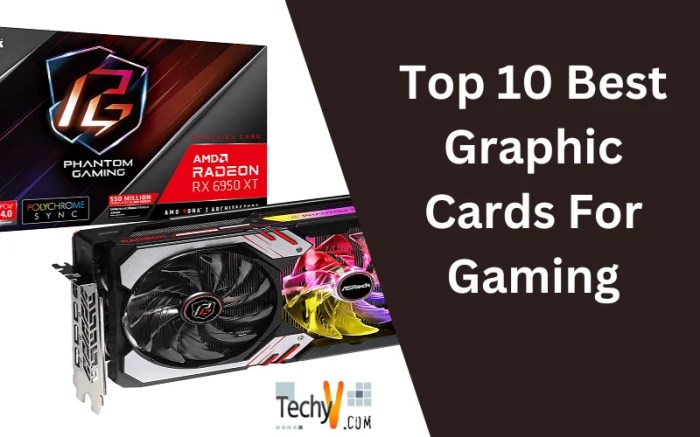
Dive into the world of gaming with our top picks for the best graphics cards! Get ready to explore the ideal options for maximizing your gaming performance.
Whether you’re a hardcore gamer or just starting out, finding the right graphics card can make all the difference in your gaming experience.
Best Graphics Cards for Gaming
When it comes to gaming, having a powerful graphics card is essential to ensure smooth gameplay with high-quality visuals. Here are the top 5 graphics cards currently on the market that are ideal for gaming:
NVIDIA GeForce RTX 3080
- Key Features: 10GB GDDR6X VRAM, 8704 CUDA Cores, 1710 MHz Boost Clock
- Specifications: Ray Tracing Cores, Tensor Cores, DLSS 2.0
- Performance: Excellent for 4K gaming and ray tracing
- Price-to-Performance Ratio: High-end card with great value for its performance
AMD Radeon RX 6800 XT
- Key Features: 16GB GDDR6 VRAM, 4608 Stream Processors, 2250 MHz Boost Clock
- Specifications: AMD Infinity Cache, Ray Accelerators, Smart Access Memory
- Performance: Strong 1440p and 4K performance
- Price-to-Performance Ratio: Competitive pricing for the performance offered
NVIDIA GeForce RTX 3070
- Key Features: 8GB GDDR6 VRAM, 5888 CUDA Cores, 1725 MHz Boost Clock
- Specifications: Ray Tracing Cores, Tensor Cores, DLSS 2.0
- Performance: Great for high-refresh-rate 1440p gaming
- Price-to-Performance Ratio: Affordable option with solid performance
AMD Radeon RX 6700 XT
- Key Features: 12GB GDDR6 VRAM, 2560 Stream Processors, 2581 MHz Boost Clock
- Specifications: AMD Infinity Cache, Ray Accelerators, Smart Access Memory
- Performance: Ideal for 1440p gaming with high settings
- Price-to-Performance Ratio: Good balance between price and performance
NVIDIA GeForce RTX 3060 Ti
- Key Features: 8GB GDDR6 VRAM, 4864 CUDA Cores, 1665 MHz Boost Clock
- Specifications: Ray Tracing Cores, Tensor Cores, DLSS 2.0
- Performance: Solid 1080p and 1440p gaming performance
- Price-to-Performance Ratio: Great mid-range option for budget-conscious gamers
Computer Repair and Consulting
In today’s digital age, computers play a crucial role in our daily lives, whether for work, entertainment, or communication. However, like any other electronic device, computers can encounter problems that may disrupt our workflow. Therefore, it is essential to understand how to troubleshoot common computer issues, the importance of regular maintenance, and when to seek help from a computer repair technician or consultant.
Tips for Troubleshooting Common Computer Issues
- Restart your computer: Sometimes, a simple restart can fix minor software glitches.
- Check for updates: Make sure your operating system and software are up to date to prevent compatibility issues.
- Run antivirus scans: Malware or viruses can cause performance issues, so regularly scan your system for any threats.
- Clean up disk space: Remove unnecessary files and programs to free up space and improve system performance.
Importance of Regular Maintenance
Regular maintenance is crucial to prevent computer problems and ensure optimal performance. It includes tasks such as updating software, cleaning hardware components, and managing disk space. By maintaining your computer regularly, you can extend its lifespan and avoid costly repairs in the future.
Role of a Computer Repair Technician
Computer repair technicians are trained professionals who specialize in diagnosing and fixing hardware and software issues. They can help with troubleshooting, repairing or replacing faulty components, and optimizing system performance. Whether you are facing a hardware failure or a software glitch, a computer repair technician can provide the expertise needed to resolve the problem efficiently.
Best Practices for Finding a Reliable Computer Repair Service or Consultant
- Ask for recommendations: Seek referrals from friends, family, or colleagues who have had positive experiences with computer repair services.
- Check reviews and ratings: Look for online reviews and ratings to gauge the reputation and reliability of the service provider.
- Inquire about certifications: Ensure that the technicians are certified and have the necessary skills to handle your computer issues.
- Get a service agreement: Before engaging a repair service, make sure to understand the terms of service, including pricing and warranty policies.
Data Communication
Data communication is the process of transferring data from one device to another through a medium. In the realm of computers, data communication plays a crucial role in enabling devices to share information and resources efficiently.
Methods of Data Communication
- Wired Communication: Involves physical cables or wires to transmit data, providing a reliable connection with high speed and security.
- Wireless Communication: Utilizes radio waves or infrared signals to transmit data without the need for physical connections, offering flexibility and mobility.
Role of Protocols
- Protocols are sets of rules and standards that govern the exchange of data between devices in a network, ensuring smooth and efficient communication.
- They define how data is formatted, transmitted, received, and acknowledged, maintaining consistency and reliability in data transmission.
Wired vs. Wireless Data Communication
| Aspect | Wired | Wireless |
|---|---|---|
| Speed | Generally faster due to dedicated physical connections. | Speed may vary based on signal strength and interference. |
| Security | More secure as data travels through cables, making it less susceptible to interception. | Potentially less secure as radio waves can be intercepted, requiring encryption for protection. |
| Reliability | Less prone to interference or signal loss, providing a stable connection. | Susceptible to signal disruptions from obstacles or environmental factors. |
Computers E-Books
E-books have revolutionized the way we learn about computers and technology. With the convenience of digital formats, e-books offer a cost-effective and accessible way to stay updated on computer trends, programming languages, troubleshooting techniques, and more.
Benefits of E-Books for Learning
- Portability: E-books can be accessed on various devices, making it easy to carry your entire library wherever you go.
- Interactive Content: Many e-books include interactive elements such as videos, quizzes, and simulations to enhance learning.
- Search Functionality: E-books allow you to quickly search for specific topics or s, making it easier to find information.
- Cost-Effective: E-books are often more affordable than traditional textbooks, saving you money in the long run.
Recommended E-Books
- “Computer Basics for Beginners” by TechGenius
- “Programming 101: A Beginner’s Guide to Coding” by CodeMaster
- “Troubleshooting Techniques: A Comprehensive Guide” by ITPro
Revolutionizing Access to Computer Knowledge
E-books have democratized access to computer-related knowledge by eliminating barriers such as physical location and cost. Anyone with an internet connection can now access a vast library of e-books on various computer topics, leveling the playing field for aspiring tech enthusiasts.
Cost-Effective Learning with E-Books
- Subscription Services: Many e-book platforms offer subscription services that provide unlimited access to a wide range of computer-related titles for a flat monthly fee.
- Free Resources: Some e-books are available for free, allowing you to learn about computers and technology without breaking the bank.
- Updates and Revisions: E-books can easily be updated and revised to reflect the latest trends and advancements in the tech industry, ensuring you stay current with the rapidly evolving field of computer science.
Graphics and Multimedia
In the digital world, graphics and multimedia go hand in hand, creating visually appealing and interactive content that engages users on various platforms.High-quality graphics play a crucial role in multimedia content creation by enhancing the overall look and feel of videos, games, websites, and other digital media. Whether it’s stunning visuals in a movie, detailed animations in a video game, or sleek design elements on a website, graphics help to captivate audiences and convey information effectively.Graphics not only make multimedia content more visually appealing but also contribute to the user experience.
From intuitive user interfaces to eye-catching animations, well-designed graphics can make interactions more engaging and enjoyable for users, keeping them coming back for more.Popular software used for graphics and multimedia development include Adobe Creative Suite, which offers a range of tools for graphic design, video editing, and web development. Other notable software includes Autodesk Maya for 3D modeling and animation, Blender for open-source 3D graphics creation, and Cinema 4D for motion graphics and visual effects.
Impact of High-Quality Graphics on Multimedia Content Creation
- High-quality graphics enhance the overall visual appeal of multimedia content, making it more engaging for viewers.
- Detailed graphics help convey information effectively, whether it’s through illustrations, animations, or infographics.
- Well-designed graphics can set a professional tone for multimedia projects, attracting a wider audience and increasing credibility.
How Graphics Enhance User Experience in Multimedia Applications
- Intuitive user interfaces with visually appealing graphics make it easier for users to navigate multimedia applications.
- Interactive graphics engage users and encourage them to interact with the content, leading to a more immersive experience.
- Well-designed graphics can convey emotions and messages effectively, creating a memorable user experience.
Popular Software for Graphics and Multimedia Development
- Adobe Creative Suite: Offers tools for graphic design, video editing, and web development.
- Autodesk Maya: Used for 3D modeling and animation.
- Blender: Open-source software for 3D graphics creation.
- Cinema 4D: Specializes in motion graphics and visual effects.
Computers Hardware

When it comes to computers, hardware plays a crucial role in determining the overall performance and functionality of the system. From the processor to the graphics card, each component has a specific function that contributes to the smooth operation of the computer.
Essential Hardware Components
- The Central Processing Unit (CPU): Often referred to as the brain of the computer, the CPU is responsible for executing instructions and tasks.
- Random Access Memory (RAM): RAM provides temporary storage for data that the CPU needs to access quickly, allowing for faster processing.
- Storage Devices (HDD/SSD): Hard disk drives (HDD) and solid-state drives (SSD) store data, programs, and the operating system.
- Motherboard: The motherboard serves as the main circuit board where all components are connected, facilitating communication between them.
- Graphics Processing Unit (GPU): The GPU handles graphics-related tasks, making it essential for gaming, multimedia, and graphic design.
Selecting Compatible Hardware
- Ensure that the hardware components you choose are compatible with each other and with your operating system.
- Consider factors such as power requirements, physical size, and connectivity options when selecting hardware.
- Check for compatibility lists and recommendations from manufacturers to avoid potential issues.
Upgrading or Replacing Hardware Components
- Before upgrading, identify the components that are bottlenecking your system’s performance.
- Research the compatibility of new components with your existing setup to ensure a smooth upgrade process.
- Follow proper installation procedures and consider seeking professional help if you are unsure about the process.
Last Word
In conclusion, selecting the best graphics card for gaming is crucial for an immersive and seamless gaming experience. With the right choice, you can elevate your gameplay to new heights.
Questions Often Asked
Which graphics card is best for high-end gaming performance?
The NVIDIA GeForce RTX 3080 is currently one of the top choices for high-end gaming performance due to its exceptional power and capabilities.
Are expensive graphics cards always better for gaming?
Not necessarily. The best graphics card for gaming depends on your specific needs and budget. Sometimes, mid-range cards can offer great performance for the price.
What factors should I consider when choosing a graphics card for gaming?
Key factors to consider include performance benchmarks, VRAM capacity, cooling solutions, and compatibility with your gaming setup.
How often should I upgrade my graphics card for optimal gaming performance?
It depends on your gaming habits and the latest game requirements. Typically, upgrading every 2-3 years can help you stay up-to-date with the latest gaming technology.


